Esports, or electronic sports, have exploded into a global phenomenon, transforming the landscape of competitive entertainment. Over the last decade, this once niche sector has evolved from basement tournaments and small community events into a billion-dollar industry. Professional gamers now command global followings, huge sponsorships, and significant prize pools. In this post, we’ll explore the rise of esports, its impact on the gaming industry, its relationship with traditional sports, and its bright future.
The Beginnings of Esports
The journey of esports can be traced back to the early days of gaming. As far back as the 1970s, competitive gaming had already begun to take shape with simple arcade games like Space Invaders and Pong. In the 1990s, video game tournaments such as the Red Annihilation Tournament for Quake gave rise to what we now know as modern-day esports.
However, the real turning point came with the development of online multiplayer games. Titles like StarCraft, Warcraft III, and Counter-Strike formed the foundation of the competitive gaming scene. As the internet became more accessible in the early 2000s, players from around the world could finally compete against each other in global tournaments. Streaming platforms such as Twitch, which launched in 2011, further helped elevate esports into the mainstream by providing a platform for fans to watch their favorite players and teams in action.
The Growth of Esports: A Global Industry
Today, esports is no longer confined to niche online communities. It has evolved into a massive, international entertainment industry with millions of fans, players, and teams. According to Newzoo’s Global Games Market Report, the esports industry generated over $1 billion in revenue in 2021, and the audience base continues to grow exponentially.
Several factors have contributed to this rapid growth. One of the most important is the increasing popularity of streaming platforms like Twitch, YouTube, and Facebook Gaming, where viewers can watch live matches, gaming tutorials, and esports events. These platforms have created a new form of entertainment that is tailored specifically for the digital age.
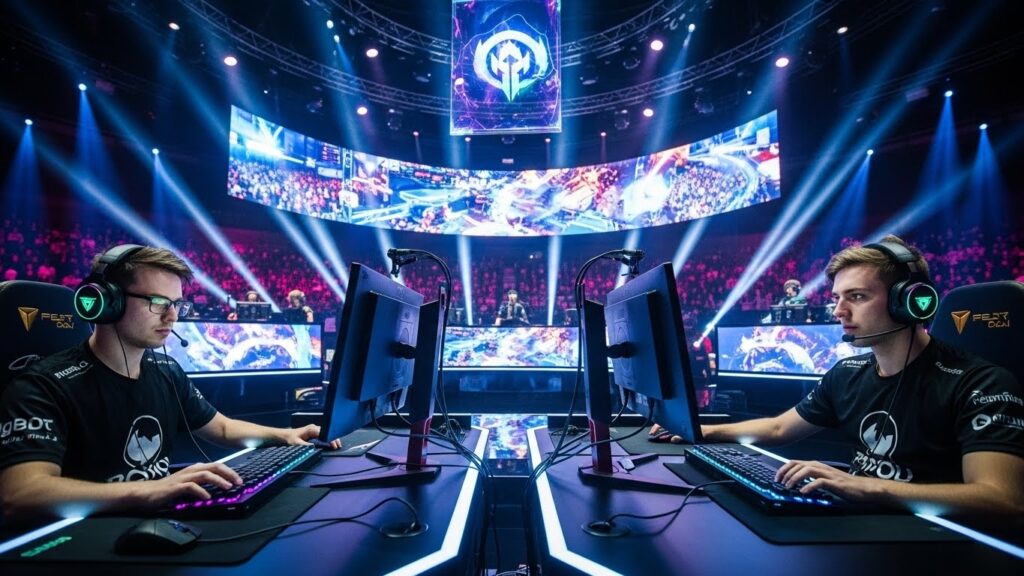
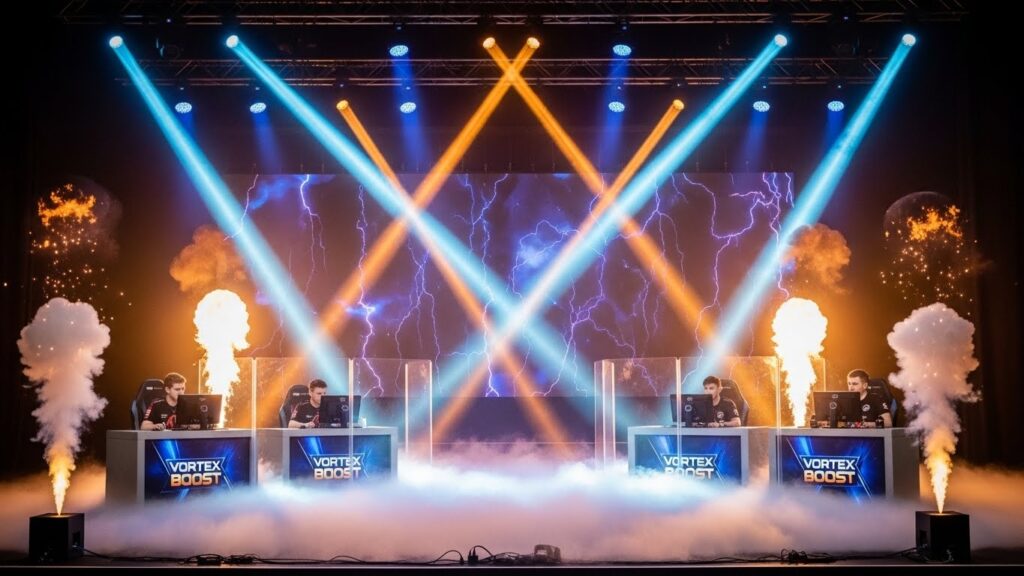
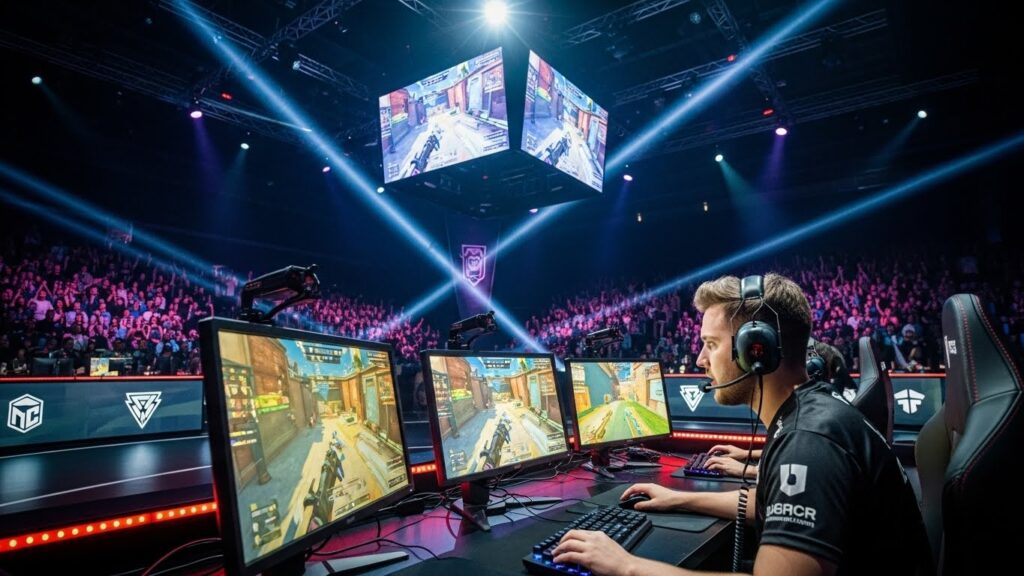
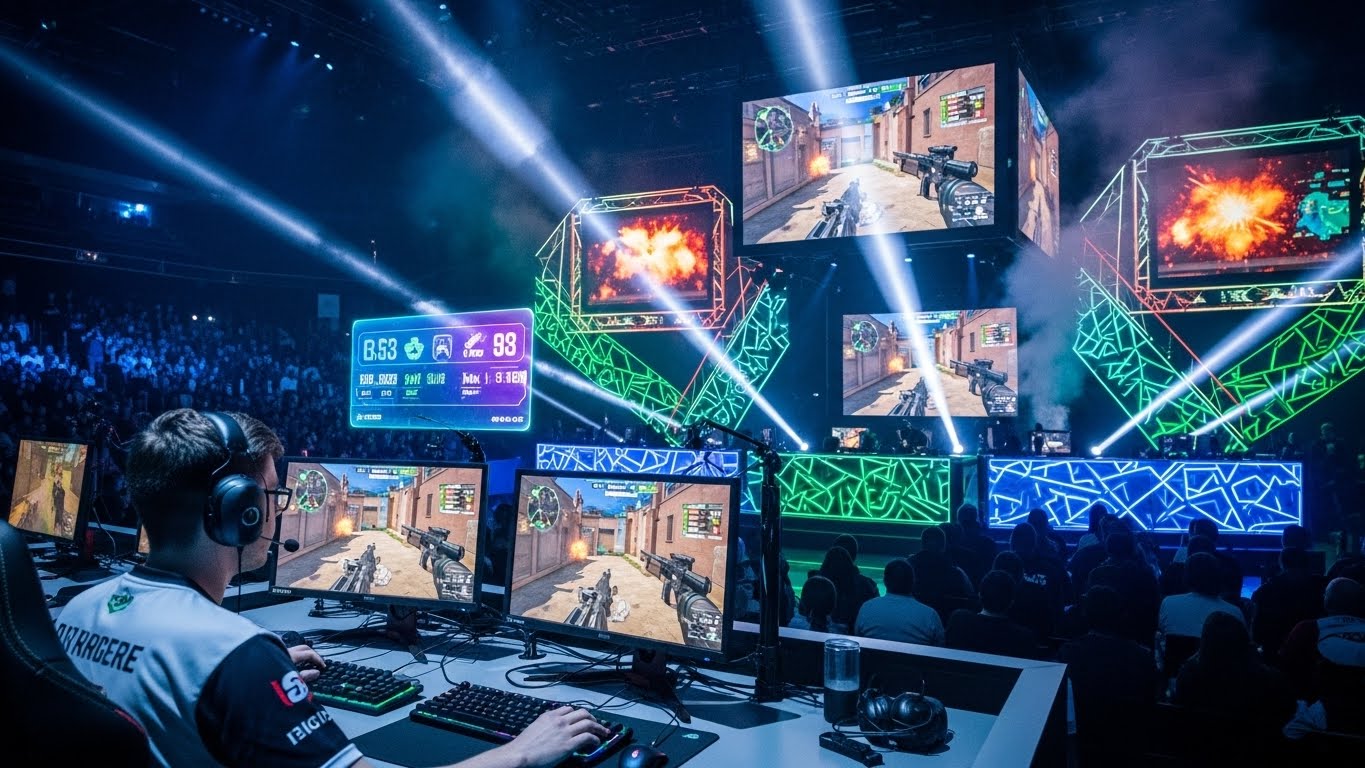
Esports tournaments are now being held in massive arenas, drawing in tens of thousands of spectators in person, and millions more watching from home. Events like The International (Dota 2), League of Legends World Championship, and Fortnite World Cup offer multi-million dollar prize pools and attract the attention of major sponsors such as Coca-Cola, Intel, and Mercedes-Benz. These tournaments also boast prime-time television slots and media coverage, further blurring the lines between traditional sports and esports.
Professional Esports: A New Career Path
In the past, becoming a professional athlete meant excelling in traditional sports like football, basketball, or tennis. Today, young gamers can aspire to turn their passion for video games into a full-fledged career. Professional gamers, or esports athletes, now train for hours every day, just like traditional athletes. They practice in team environments, perfecting their skills in games like League of Legends, Dota 2, Counter-Strike: Global Offensive, Valorant, and Overwatch.
The path to becoming a professional esports player is not an easy one. Like any other elite athlete, esports pros must be dedicated, disciplined, and skilled. They spend countless hours honing their gameplay mechanics, learning game strategies, and communicating effectively with teammates. With the rise of esports academies, training facilities, and dedicated coaching, aspiring players now have more resources than ever to help them break into the competitive scene.
But it’s not just about the players themselves. Behind the scenes, esports organizations have become major businesses. These teams are often sponsored by big-name brands and have operations ranging from talent scouting to marketing and merchandise sales. Esports teams have managers, coaches, analysts, and public relations experts—forming the equivalent of a traditional sports franchise. Some of the most well-known esports teams, such as Cloud9, T1, FaZe Clan, and Team Liquid, have successfully built their brands and established fanbases worldwide.
The Relationship Between Esports and Traditional Sports
Esports and traditional sports share several similarities, but they are not without their differences. One of the most significant parallels is the level of competition. Just like professional athletes in sports like soccer or basketball, esports players must go through rigorous training to sharpen their skills. Both fields demand high levels of hand-eye coordination, strategy, and quick decision-making. In fact, esports requires a similar level of physical endurance as traditional sports, with players often sitting for long hours in front of their screens, requiring excellent posture, reflexes, and mental stamina.
The similarities have led many traditional sports organizations to embrace esports. The NBA has partnered with NBA 2K to create the NBA 2K League, a professional esports league where players compete in the basketball video game NBA 2K. Similarly, football clubs like Manchester City and Paris Saint-Germain have invested in esports teams, with players competing in games like FIFA and Rocket League. Even the Formula 1 racing league has developed its own esports platform, F1 Esports, where drivers race in virtual versions of the F1 circuits.
Moreover, some professional athletes have made the leap into the world of esports, either by creating their own esports teams or by investing in existing ones. This convergence of traditional sports and esports is seen by many as an indication that the two industries will continue to intertwine in the future.
However, despite these similarities, there are key differences between esports and traditional sports. For one, the physical aspect of esports is far less demanding than traditional sports. While esports players do need to maintain good health and fitness, they don’t face the same level of physical exertion as professional athletes in basketball or football. Additionally, while esports events are held in large arenas, they are also streamed online, making them more accessible to global audiences than many traditional sports.
The Impact of Esports on Youth and Society
Esports has also made a significant impact on younger generations. Many young people now see gaming not just as a hobby, but as a potential career. In fact, some schools have even begun offering esports programs and scholarships to help students pursue professional gaming. This shift is reshaping the way we think about sports, education, and career paths for young people.
While the rise of esports has raised concerns about the potential negative effects of excessive screen time and sedentary lifestyles, it has also led to positive changes. Esports promotes teamwork, communication, and problem-solving. Players often work in teams, requiring them to collaborate and make decisions quickly under pressure. These are valuable life skills that can be transferred to other areas of work and education.
Furthermore, the social aspect of esports is undeniable. Online multiplayer games have created communities where players from all over the world can connect, compete, and share their experiences. Esports events, both live and virtual, have become social gatherings, where fans come together to cheer for their favorite teams and players. The sense of camaraderie within these communities is one of the driving forces behind the continued popularity of esports.
The Future of Esports
The future of esports looks incredibly bright. As technology continues to advance, esports will only become more immersive and engaging. Virtual reality (VR) and augmented reality (AR) are already beginning to make their mark in the gaming world, and it’s likely that these technologies will play a significant role in the future of esports.
Moreover, the increasing integration of esports with traditional sports networks, digital media, and streaming platforms will only broaden the reach of competitive gaming. As more people tune in to watch live events, esports will continue to attract larger audiences and generate even more revenue.
In the coming years, we can expect to see esports becoming an even more integral part of mainstream entertainment. New esports leagues, tournaments, and games will emerge, providing more opportunities for players and fans alike. It’s possible that esports could even be included in the Olympic Games, cementing its place as a legitimate sport in the eyes of the world.
Conclusion
Esports has come a long way from its humble beginnings as a niche hobby for gaming enthusiasts. Today, it is a booming industry that is shaping the future of entertainment, culture, and sports. As technology continues to advance, and as more players, fans, and organizations get involved, the sky’s the limit for competitive gaming. Whether you’re a gamer, a fan, or a business professional, there has never been a better time to get involved in the world of esports.
In the end, esports is more than just gaming. It’s a global movement that is redefining competition, entertainment, and community. The rise of esports is not just a trend—it’s the beginning of a new era in sports and entertainment, one where players, fans, and viewers from around the world can connect and share in the excitement of competitive gaming.